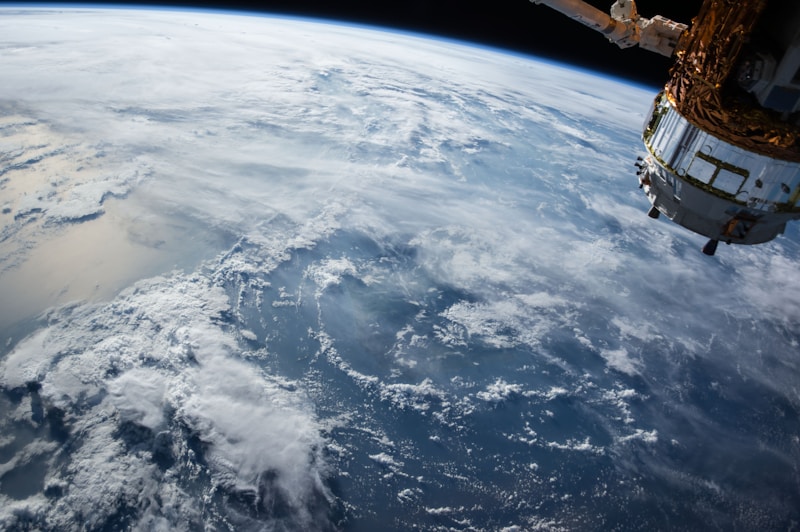
The space tourism industry has reached a historic milestone with the completion of multiple successful commercial orbital flights, marking a new era in human spaceflight that was once confined to the realm of science fiction. Private spaceflight companies have now conducted dozens of orbital flights carrying civilian passengers, demonstrating the viability of space tourism as a commercial enterprise and raising important questions about access, safety regulation, and the future of human presence in space.
The vehicles used for these commercial flights represent the culmination of decades of rocket development and represent a dramatic departure from the government-dominated space programs of the twentieth century. The spacecraft are designed with passenger comfort and safety as primary objectives, featuring large windows, advanced life support systems, and reentry capabilities that provide a smoother ride than the military-grade vehicles used in earlier eras. The reusable nature of these vehicles has dramatically reduced the cost of access to space, making orbital flights accessible to a much broader segment of the population.
Ticket prices for orbital flights have declined significantly from the early days of space tourism, though they remain beyond the reach of most people at approximately half a million dollars for a multi-day orbital experience. Companies are working to bring down costs further through technological improvements and economies of scale, with some projecting that prices could fall below $100,000 within the next decade. At these price points, space tourism could become a significant market segment in the luxury travel industry.
The regulatory framework for commercial spaceflight has struggled to keep pace with the industry's rapid development. Current regulations were designed for occasional government launches and do not adequately address the safety requirements for regular commercial passenger service. The Federal Aviation Administration has been working to develop a new regulatory framework that balances the need for safety with the desire to avoid stifling innovation, but this process has been complicated by disagreements between industry, regulators, and safety advocates.
The environmental impact of frequent space launches has raised concerns among scientists who worry about the effects of rocket emissions on the atmosphere and the accumulation of debris in orbit. While each individual launch has a relatively small environmental footprint, the projected growth of the industry could lead to meaningful cumulative effects that are not yet fully understood. Some companies have committed to carbon-neutral operations, though the technical feasibility of this goal remains uncertain.
The psychological and physiological effects of spaceflight on civilian passengers have been a subject of scientific study, with researchers gathering data on how ordinary people respond to the experience of microgravity and space radiation. Early findings suggest that most passengers adapt well to the space environment, though some experience significant motion sickness and disorientation during the transition to and from orbit. The long-term health effects of repeated spaceflight exposure remain unknown and will require years of follow-up studies to determine.
The broader implications of commercial spaceflight extend beyond tourism to include satellite deployment, manufacturing in microgravity, and eventually the establishment of permanent human presence beyond Earth. Companies are already planning orbital research facilities and manufacturing platforms that could take advantage of the unique conditions available in space. These applications could eventually become more economically significant than tourism, transforming space into a site of industrial activity rather than merely exploration.
The social implications of widespread space access have prompted reflection on the meaning of human presence in space and who gets to participate in this new frontier. Critics have noted that the benefits of space exploration have historically accrued primarily to wealthy nations and elite groups, and space tourism risks replicating these patterns of exclusion. Others argue that commercial spaceflight represents an democratization of access that will eventually bring the benefits of space to a broader population.